There is a long-standing theory in South Asian diplomacy that cricket functions as a safety valve. For decades, the pitch was viewed as a ‘demilitarised zone’, a rare space where India and Pakistan could engage without the immediate threat of escalation. This concept, often referred to as ‘cricket diplomacy’, assumes that cultural exchange serves as a precursor to political dialogue. From General Zia-ul-Haq’s famous visit to Jaipur in 1987 to the frantic goodwill tours of the mid-2000s, the sport was used to humanise the enemy.
However, the events of September 2025 suggest that this theoretical framework is now obsolete. During the Asia Cup in Dubai, the ‘Gentleman’s game’ ceased to be a tool for engagement and became a theatre of conflict. We are no longer witnessing the use of soft power to build bridges; instead, we are seeing the weaponisation of sport to reinforce hard borders.
The handshake that never happened
The most significant moment of the 2025 Asia Cup did not involve a bat or a ball. It occurred during the post-match ceremonies, usually a mundane affair of handshakes and polite applause. Following the final, the victorious Indian team broke with decades of sporting tradition by refusing to shake hands with the Pakistani players. This was followed by a refusal to accept the Asian Cricket Council (ACC) championship trophy from its president, Mohsin Naqvi.
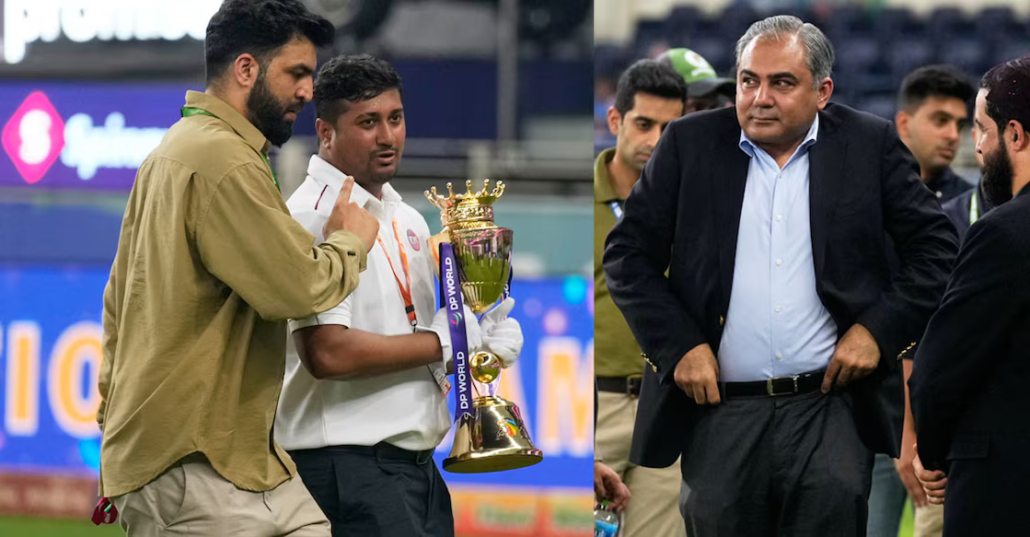
To the casual observer, this might appear to be mere petulance. However, from a diplomatic perspective, it is a calculated signal. Mr Naqvi currently serves as a minister in the Pakistani government, holding a portfolio that blurs the line between sports administration and state governance. By refusing the trophy, New Delhi was not only snubbing a cricket official but also rejecting the legitimacy of a Pakistani state representative.
This incident marks a departure from the ‘compartmentalisation’ strategy of the past. Previously, India and Pakistan attempted to separate cultural ties from political disputes. The breakdown of basic sporting etiquette in Dubai indicates that this separation is no longer tenable. The message is clear: there is no neutral ground, and even the cricket pitch is now subject to the strictures of bilateral hostility.
‘Operation Sindoor’ on the pitch
To understand the severity of this shift, one must contextualise the match within the broader geopolitical environment. The shadow of ‘Operation Sindoor’, India’s military response to the Pahalgam terror attacks in May 2025, loomed large over the tournament. In previous crises, sport was used to signal a return to normalcy. In this instance, it was used to extend the conflict.
The rhetoric following the match confirms this transition. Prime Minister Narendra Modi’s statement, which characterised the victory as ‘Operation Sindoor on the games field’, is analytically significant. It represents the militarisation of sporting success. By explicitly linking a cricket match to a military operation, the state effectively conscripted the athletes into the national security apparatus.
This rhetorical move serves a specific function in domestic politics. It validates the government’s hardline stance by performing dominance on a global stage. For the academic observer, this is a clear example of how soft power assets can be co-opted to serve hard power narratives. The cricket match was not treated as a break from the war; it was presented as a continuation of it.
The weaponisation of engagement
Scholars of international relations often distinguish between engagement (maintaining contact) and containment (isolating an adversary). The current dynamic between India and Pakistan represents a hybrid phenomenon: belligerent engagement. The two nations are not boycotting each other, which would be a form of disengagement, but are instead using the platform of engagement to publicly display their animosity.
This strategy serves two primary purposes:
- Audience costs: By refusing handshakes and trophies, the Indian team signals to its domestic support base that there is no ‘business as usual’ with Pakistan. It is a low-cost way to demonstrate resolve without firing a shot.
- Institutional paralysis: The incident highlights the weaknesses of international sporting bodies such as the ACC and the International Cricket Council (ICC). These institutions function on the premise of cooperation. When member states decide to use the institutions as battlegrounds, the governance structure collapses.
The implications for future diplomacy are grim. Suppose the protocols of a cricket match, the most regulated and ritualised form of interaction between the two neighbours, cannot be maintained. In that case, it is difficult to see how complex diplomatic negotiations can survive.
The romantic ideal of cricket diplomacy was predicated on the belief that shared cultural passions could transcend political divides. The 2025 Asia Cup has likely put that ideal to rest. We have entered an era in which sport is no longer a sanctuary from realpolitik, but a mirror reflecting its ugliest contours.
As we analyse the fallout, the loss is not just sporting, but diplomatic. The pitch was one of the few remaining spaces for dialogue, however symbolic. By turning it into a proxy battlefield, both nations have reduced the space for de-escalation. The ‘Gentleman’s game’ has not just lost its manners; it has lost its utility as a vehicle for peace.
Click to show page navigation!