Overview
The course consists of 8 modules, as follows:
Module 0 – Orientation to online learning: During this short module, participants will be introduced to the online classroom and the tools for communication and interaction that they will use during the course. Participants will also be guided through practice exercises and will have the chance to ask questions and request assistance as needed.
Module 1 – Introduction to humanitarian diplomacy: This module defines humanitarian diplomacy, its components, and related concepts. It introduces the IFRC Humanitarian Diplomacy Policy and its four signposts for action. Next, it discusses how humanitarian diplomacy has evolved, and its relevance in current complex operational contexts. The module concludes by looking at the profile of a humanitarian diplomat.
Module 2 – Humanitarian diplomacy toolkit: This module offers a set of tools for understanding, developing, and implementing humanitarian diplomacy activities. These include humanitarian principles, international law, the evidence-based approach, and communication skills. Practically speaking, the toolkit helps humanitarian diplomats engage in debate, argue in favour of their positions, persuade interlocutors, and find creative solutions for overcoming stalemates in policy discussions.
Module 3 – Who are humanitarian diplomacy actors? This module surveys the evolution of modern humanitarian diplomacy actors. It starts from the creation of what is now the RCRC Movement and its pivotal place in the establishment of non-governmental humanitarian action. It proceeds with an examination of the RCRC Movement’s national and international characteristics, as well as the role of other actors, including national and international NGOs, national governments, international organisations, private entities, and individuals. It also covers the 1949 Geneva Conventions, their additional protocols, and other instruments of international humanitarian law.
Module 4 – Persuasion: This module focuses on persuasion in humanitarian diplomacy. It covers the three fundaments of persuasion: ethos (credibility), logos (rationality), and pathos (emotions). Following this, it looks at the actors involved in persuasion. Who should be persuaded; and who does the persuading? Finally, the module introduces tools and techniques for putting together a convincing argument, publicly or privately.
Module 5 – Persuasion strategy and methodologies: Practical guidance: This module presents a range of practical tools for developing a strong advocacy strategy. It introduces advocacy and how it happens. It explains how advocacy fits into the wider set of skills and activities that make up the humanitarian diplomacy field. It provides methods for identifying and defining an advocacy issue, and offers checklists for credibility and risk. The module presents the benefits and challenges of working in partnerships.
Module 6 – Negotiations in humanitarian diplomacy: This module introduces definitions, objectives, and negotiation theory. It looks at the specific features of humanitarian negotiations. The process of negotiation, starting from preparation and strategy, and moving into the actual negotiation, is covered. The module offers case studies of humanitarian negotiation in the multilateral, regional, and national contexts, as well as in crisis and conflict situations.
Module 7 – Humanitarian diplomacy beyond negotiations: Through examination of case studies, this module looks at using humanitarian diplomacy to ensure the implementation of a negotiated outcome, demonstrating that diplomacy does not cease with the signature of an agreement. The module covers practical considerations and obstacles to implementation.
Module 8 – Other practical skills in humanitarian diplomacy: Many practical skills are relevant to humanitarian diplomacy, including protocol, drafting, media training, public speaking, and use of social media. The module discusses each of these topics, and also covers monitoring and evaluation of humanitarian diplomacy activities.
 The course is an eye-opener for diplomacy, advocacy, and policy engagement within the humanitarian sector on the global level. The content was comprehensive and well designed, and the instructors were very knowledgeable and passionate about the subject. Their feedback on our classwork widened our perspectives.
 Thanks to this course, I have gained valuable knowledge and professional skills that have transformed the way I approach humanitarian diplomacy. I am now better equipped to negotiate and persuade decision makers on behalf of vulnerable communities and beneficiaries, representing the Somali Red Crescent Society with confidence and expertise.
 The course gave me immersive, critical, and dynamic skills best suited to my profession whilst still working for my organisation. I have gained incredible confidence and exposure. I had the best experience with lectures and students from various parts of the world with different backgrounds. It was very easy to learn as I found everything I need in one place.
 Both professionally and personally, I now have a broader understanding of the humanitarian world, its fundamental laws and principles, and the different actors who are part of it. This has expanded my thinking about possible partnerships and alliances in order to strengthen my work in the Federation, and the different aspects and steps I need to consider in order to make such partnerships happen.
 This course offers skills development in advocacy, negotiation, communication, formal agreements, and other measures through sharing experiences with students from around the world and with distinguished professors. It was a wonderful course. I have gained a lot of experience which I now use it in my field.
 What was most valuable and had a direct impact on my work was the frequent and direct exchange with several very experienced humanitarian diplomacy practitioners – both through the weekly online discussion sessions and through an individually assigned tutor during the research phase. I really got a lot of valuable input and advice out of that. Most of all, learning was interesting and enjoyable because of all that interaction.
 As a non-Red-Cross participant, this course helped me understand the humanitarian world. I acquired technical skills for practicing humanitarian diplomacy theories and principles in different situations. I found the course very beneficial because it helped me develop research and other skills and knowledge required in the workplace. The course also opened doors for networking with experienced humanitarian diplomacy practitioners representing the Red Cross Red Crescent Movement and NGOs.
 Completing the Humanitarian Diplomacy course was an incredibly enriching experience for me. The course’s lecturers fostered analytical thinking and led stimulating discussions on urgent humanitarian diplomacy actions worldwide. I strengthened my diplomatic skills and gained valuable tools that are instrumental in my professional growth, while the well-designed online classroom format made learning a joy.
 Quelle expérience merveilleuse que le cours de diplomatie humanitaire. L’agencement des différentes sessions et programmes nous permet une compréhension totale des différentes étapes telles que la négociation, la médiation, et la collaboration avec les populations en situation de détresse. Pour une personne voulant intégrer le système des N.U, ce cours est un tremplin pour une bonne maîtrise de l’action humanitaire. On y apprend toute une panoplie de thèmes des principes humanitaires, du protocole de la Fédération Internationale de la Croix Rouge en passant par les acteurs humanitaires. J’y ai acquis des connaissances en diplomatie humanitaire et en négociation sans oublier mes nouveaux amis dans le monde entier. Le cours est certes en anglais mais avec un niveau de langue accessible à tous.
 The most valuable part of the course was learning from the contributions of other students. The classroom was filled with people from all over the world with tangible experience in responding to disasters, armed conflict, health issues, and development and emergency situations. Their experiences highlighted where humanitarian diplomacy and advocacy works in reality, and where the theory needs to be reworked or reconceptualised to fit the real world.
 It was great to work together with the course lecturers and participants as they all had unique contributions to make, and I learned from all of them. The course material is rich and can benefit people with varied levels of professional experience and backgrounds. I am already putting what I learned to good use and hope I will have more opportunities to use it in the coming years.
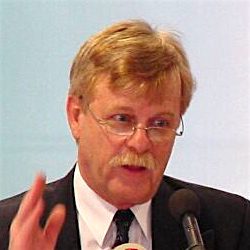

 Sahar Okhovat lives in Sydney, Australia and works as a senior policy officer with the Refugee Council of Australia. She is interested in the issues related to forced migration in general and more specifically in the use of immigration detention and deterrence policies.
  Timothy McInerny is an Australian calling Tbilisi, Georgia home. Having spent time with civil society organisations, the Red Cross, and the UN, he is currently a global advisor with the Norwegian Refugee Council.
  Leila Kibet is an international development professional from Kenya with years of experience in over seven countries in Eastern Africa. She currently works with the Belgium Red Cross Flanders in Tanzania as a programme delegate in the areas of Disaster Management, Disaster Risk Reduction and cash transfer programming and social protection.
 Between 2008-2019, Javier Ormeno worked for the Red Cross in emergency operations and coordination around the globe. Originally from Peru, he has a BA in Philosophy and an MA in Human Rights. He is part of the Theatre of Transformation Academy and is interested in transitional justice, and arts as an advocacy tool for migrant and LGTB+ rights