Watch the documentary Abuse in the World of Online Games by ARTE & ZDF on TV on 23 September 2025, or online until 21.12.2025.
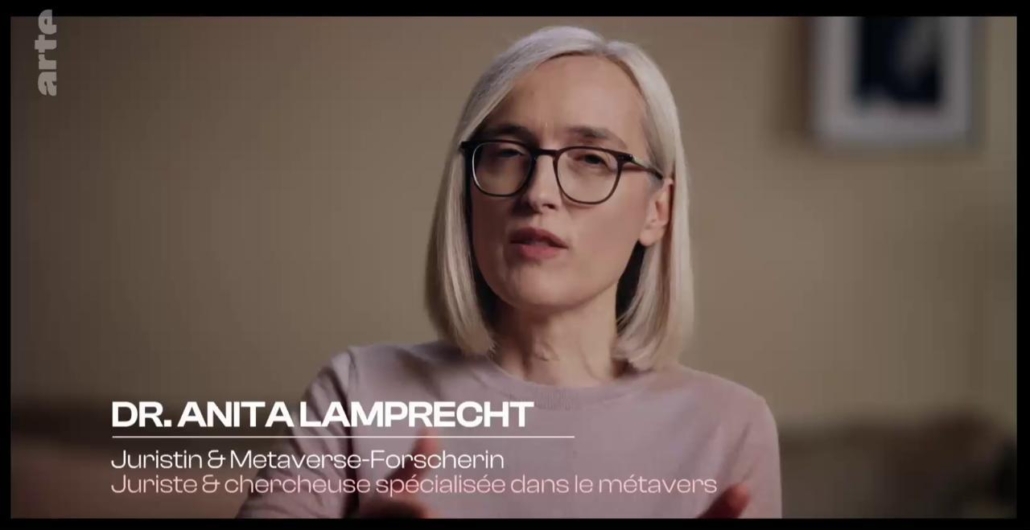
Note: I had the honour of contributing to the ARTE & ZDF documentary Abuse in the World of Online Games as a legal metaverse expert. When Margarita Dreiling, from beetz brothers film production, recorded my interview a year ago, I had only a general idea of the narrative, as the production was still under way. In this blog post, I share my reflections after finally watching the documentary, exploring the topic from the unique intersection of being a participant in the project, a viewer of the final product, and a legal expert in the field.

Poster for the documentary Abuse in the World of Online Games (beetz brothers).
The metaverse
The documentary centres on three North American teenage girls: Alex, Janae, and Katie, and takes us into their world, where cyberspace and physical spaces merge into a single reality: the metaverse.
To me, the metaverse is everything. It’s a universe.
–Janae
It is a reality they profoundly love. In this space, the teenagers can overcome the limitations they experience in the physical world and express themselves in far more creative ways. Their passion reflects the promise of the metaverse: a space of free expression, where you can be whoever you want to be, without the constraints of the ‘real’ world. Yet their journey also exposes the darker side of this emerging ecosystem, where the blurred lines between physical and digital worlds create new vectors for harm alongside new sources of value.
Alex: ‘I love Roblox’
Alex is a successful gamer and creator on the social gaming platform Roblox, with 700,000 followers. For Alex, the metaverse is real, a retreat from physical life. In the metaverse, her disabilities no longer define her; instead, it is a space that enables her to create and build her own business. Alex loves the metaverse despite the harsh reality of child exploitation she discovered on Roblox. She is an activist who investigates predators and utilises her digital presence to raise awareness of these dangers, reporting cases to the police. Her attempts to reach out to Roblox proved frustrating, as the platform provider either remained inactive or deflected responsibility, a pattern of corporate indifference that amplified her feelings of helplessness.
Alex’s activism comes at a high price. When she began raising awareness about sexual harassment and paedophile activities on the platforms, she experienced massive backlash and dangerous threats of having her identity exposed online. The backlash was so severe, and the feeling of helplessness so profound, that she attempted to take her own life several times. Nevertheless, she continued to fight for a better metaverse together with her friends.
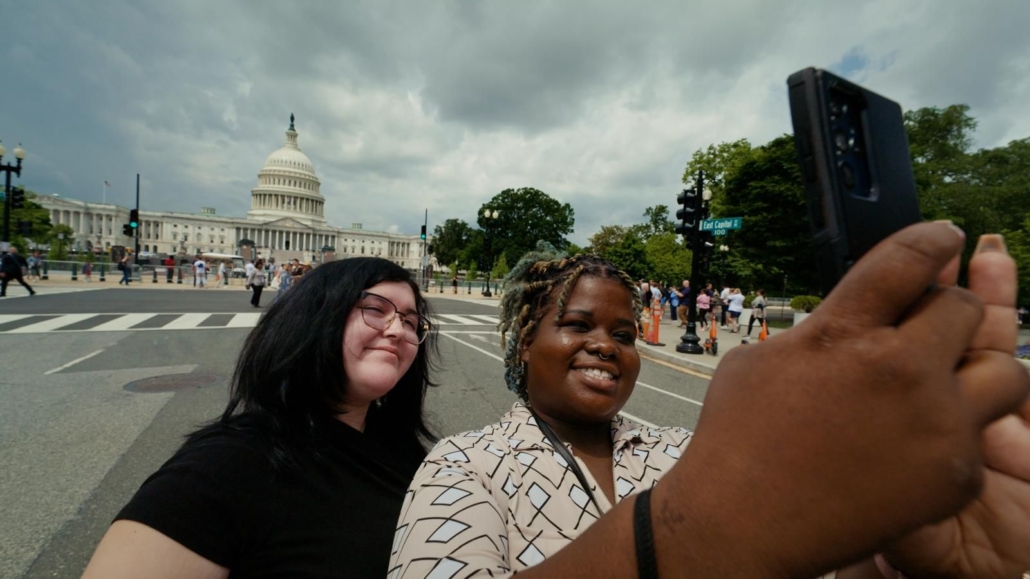
Janae: ‘The metaverse is like an extension of me.’
Her friend Janae is an enthusiastic streamer and a devoted fan of the open-world game Minecraft. She loves the game because it gives her the freedom to let her imagination run wild. Janae describes how she fully immerses herself in the game, identifying with her avatar. After repeatedly being spawnkilled (killed instantly upon entering a game), she came to realise the harsh reality of racism on the platform. Her experience is not an isolated case.
Experts emphasise that such platforms have become breeding grounds for extremism. Studies show that children are more receptive to different forms of grooming in immersive environments, especially when hate speech and extremism are normalised. Following her experience and witnessing the deadly effects of radicalisation on Roblox through the Buffalo massacre in 2022, Janae became an activist, creating spaces for diverse avatars and actively fighting for a safer metaverse.
Katie: ‘You can interact with others, like in a new life.’
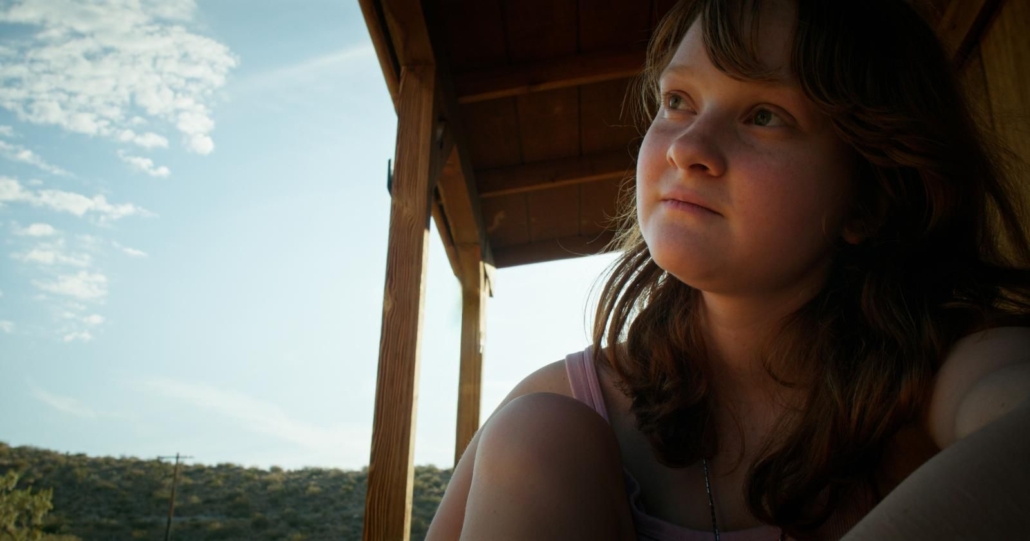
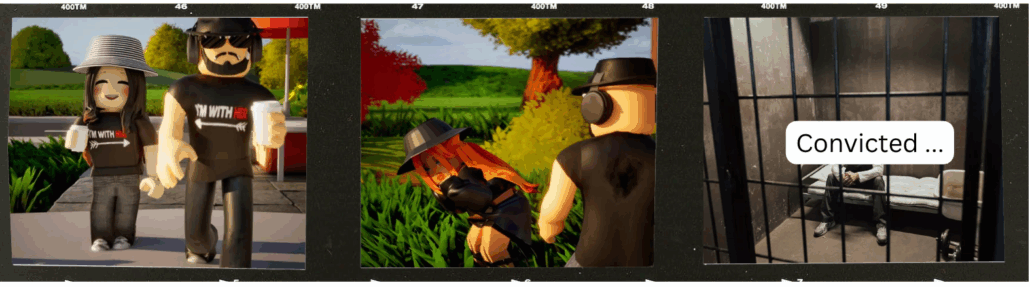
The third protagonist is Katie. She began playing Roblox at the age of 12. For her, engaging with friends online was easier than interacting in person, so gaming on Roblox became a central part of her life. Although the platform was originally designed for children, it also attracted adult developers – and Katie fell victim to grooming by one of the most successful developers. He was later sentenced to 15 years’ imprisonment and 20 years’ supervision in another case of child abuse.
Like Janae and Alex, Katie was exposed at an early age to disturbingly explicit content, extremism, racism, paedophile predation, and hate through gaming platforms intended for children.
A gentle rebellion
The documentary follows their journey to fight for a better metaverse, not just despite their experiences, but because of them. Their journey is a quiet rebellion against the systemic negligence of platform providers. Their stories expose the stark reality children face on these platforms: a reality of abuse, of calls for help met with silence, and of stakeholders who refuse to take responsibility.
When children are the victims, these issues become personal. As a legal metaverse researcher, I found the documentary’s portrayal of these stories profoundly disarming. In the face of such vulnerability, the cynical arguments I have encountered over years of research, especially those questioning the reality of virtual harm, simply collapse. The film stands as a direct response to the most common and dismissive questions about abuse in the metaverse.
‘It’s not real, why bother?’
When it comes to reality, the documentary places the viewer in the children’s perspective. We readily acknowledge children’s ability to immerse themselves fully in fantasy worlds. We do not belittle them when it comes to harmful content in films; instead, we protect them from it. The fact that all three girls were intimidated by adults on gaming platforms designed for children forces us to confront the underlying problems of child grooming, sexual harassment, racism, and hate speech.
To me, the documentary is disarming because it bypasses the viewer’s detached intellectual arguments and appeals directly to human empathy. It replaces the cynical question, ‘How can pixels be real?’ with the fundamental issue, ‘How can this young person’s suffering be fake?’. The experiences of the teenage protagonists compel the audience to look beyond individual blame and examine the larger systems at play. After all, the vision behind the metaverse is to create an ecosystem where the physical and digital worlds merge into one boundless reality.
‘Why not just leave?’
The argument that people can simply walk away frames the situation as a trivial choice, akin to turning off a television show. Yet the stories of the three protagonists demonstrate that it is not that simple. It is not just turning off a screen or leaving a game; it is abandoning friendships, communities, creative projects, and even potential sources of income. For these teenagers, logging off would amount to erasing a core part of their identity and social lives. Moreover, leaving would mean surrendering a space designed for children to the abusers.
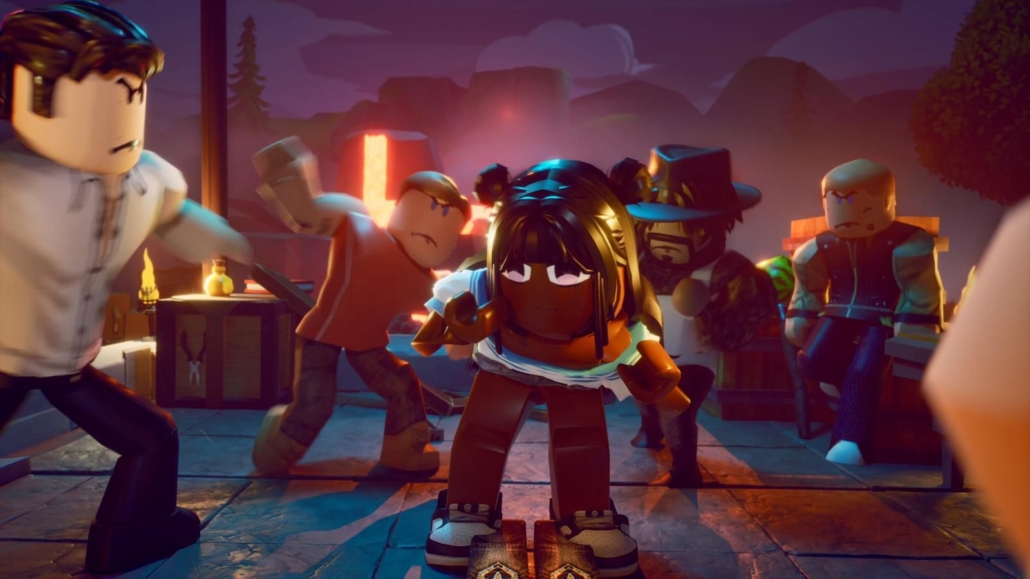
Janae’s experience with racial hate highlights the normalisation of extremism on these platforms. Her avatar was targeted simply because of its skin colour. Such experiences reframe the question entirely. To ‘just leave’ is not a neutral act; it means surrendering these digital spaces to the extremists themselves. The tragic 2022 Buffalo massacre offers a horrifying demonstration of this reality, as the young perpetrator was radicalised in these environments. Abandoning such platforms without proper governance and supervision risks turning children’s games into training grounds for real-world violence.
This reinforces a crucial point that I emphasise in my work: what happens in the metaverse does not stay in the metaverse, precisely because its very purpose is to dissolve the boundaries between our digital and physical worlds.
What happens in the metaverse, does not stay in the metaverse.
–Anita
The purpose of a system is what it does
Should we blame technology, the digital world, or cyberspace? Technology does what it is designed to do: it scales communication in both range and pace, amplifying effects – good as well as bad. This amplification is intensified by AI, which can manipulate environments and people, further blurring the boundaries between the physical and digital worlds. This convergence is the metaverse. The documentary makes clear that technology itself is not the problem; the real issue lies in how technology is governed.
The irresponsibility rests with the platform providers who host these systems of amplification. There is a principle that states: the purpose of a system is what it does. So, when victims like Alex, Janae, and Katie report misconduct and are met with silence, that silence is not a system failure. It is what the system does; it is a feature. This deliberate inaction demonstrates that the system’s true purpose is not the safety of its users but the avoidance of responsibility – and it tragically amplifies a victim’s helplessness.
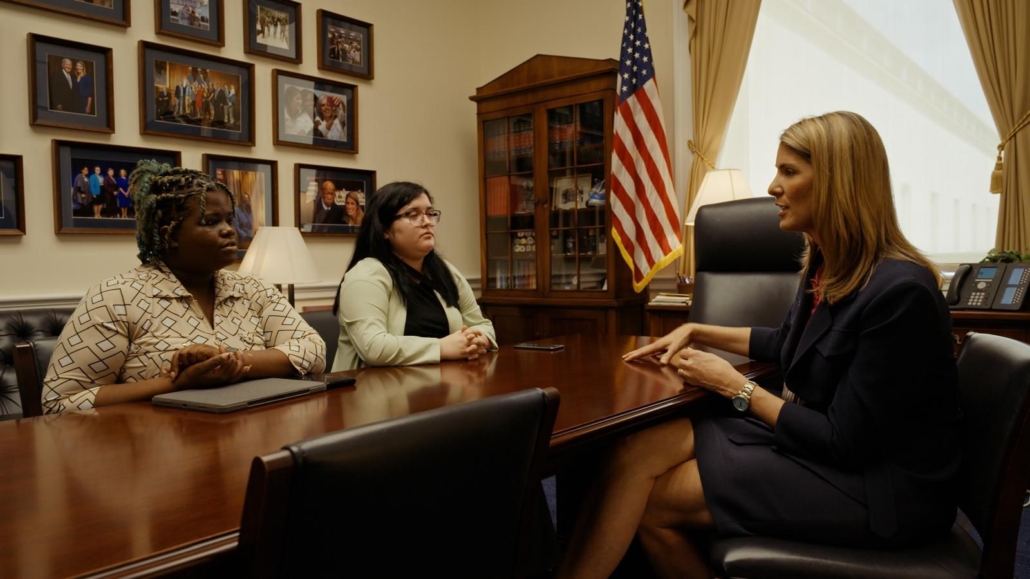
Janae and Alex with U.S. Congresswoman Lori Trahan, discussing lawmakers’ role in child protection in the metaverse (beetz brothers).
The fundamental problems of cyberspace are not new. Yet the metaverse significantly amplifies these concerns, while most decision-makers either fail to grasp this emerging space or are already influenced by the companies profiting from it. The documentary illustrates how even diligent parents can be overwhelmed, and at times misled, by platforms’ safety declarations. To confront these legal challenges, we need a clear and fundamental understanding of what we are dealing with. Because these platforms are populated by children, we cannot afford to regard them as mere sandboxes in which powerful stakeholders test their limits. The stakes are far too high.
The art of filmmaking
I would like to thank Margarita Dreiling and the entire filmmaking team for allowing me to contribute to this documentary. The problems faced by younger generations can feel overwhelming, even breaking. Yet the documentary balances this painful reality with the youthful impulse not to conceal their deep scars, but to transform them. The Japanese philosophy of Kintsugi captures this process of transformation: the art of mending what is broken, not by hiding the damage, but by illuminating it. By filling an object’s cracks with gold, its history of fractures is transformed into its most beautiful and resilient feature.

This is the documentary’s most outstanding achievement: it elevates the girls’ experiences. It honours the fractures left by deeply disturbing events and, through the act of telling their stories, transforms them into something of immense value – defiant hope for a better world. Above all, I admire the courage of Alex, Janae, and Katie in sharing their stories. Their ability to transform personal pain into a public call for change is an act of true strength and inspiration.
Book preview: UN 2.0 and the Metaverse
The stories in this documentary are symptoms of a larger issue: the breakdown of the implicit social contract between technology and society. My forthcoming book, UN 2.0 and the Metaverse, examines this breakdown and explores the most comprehensive effort to renew that contract through the UN 2.0 initiative. The book adopts a dual approach, combining critical academic analysis with a narrative told from the perspective of the UN 2.0 initiative itself. The aim is to move beyond detached observation and to model the constructive dialogue we so urgently need. It offers a new conceptual framework to equip policymakers, technologists, and citizens with the tools to diagnose the failures in our social contract and to build a new era of responsible socio-technical governance.
Available soon; for updates, please visit: https://www.diplomacy.edu/diplopublish.
Watch the movie trailer (in German)
Trailer for the documentary ‘Abuse in the World of Online Games’ (beetz brothers).
Click to show page navigation!