Television has always had a weakness for power, the kind that sits in conference rooms and makes the world tremble with a signature. But lately, diplomacy, that old, discreet art of managing nations through conversation rather than conquest, has found itself back on screen, stylised, dramatised, and dressed for binge-watching.
In The Diplomat, Netflix’s taut political drama, Keri Russell plays Kate Wyler, an American ambassador reluctantly posted to London. She is clever, weary, and perpetually underdressed for the palace receptions she must attend. Her mission, to contain a crisis involving a bombed British warship, a volatile Russia, and a husband who understands too much, is as much emotional as geopolitical. The series turns diplomacy into spectacle, an affair of adrenaline and moral ambiguity.
It is tempting to dismiss such shows as fantasy: diplomacy as a sprint, conducted between champagne flutes and encrypted calls. Yet behind the drama lies a surprisingly rich portrayal of the many faces of modern diplomacy: an exercise in improvisation, psychology, and endurance. Television, with its hunger for character and crisis, has finally recognised that the quietest rooms often hold the highest stakes.
Bilateral diplomacy: Old wine in new glasses
At its core, The Diplomat is about the oldest form of diplomacy there is: one country talking to another. Every ambassador knows the paradox at the heart of this profession, that diplomacy is at once an act of distance and of intimacy. One must represent a nation while discerning others’ fears, desires, and limits. The show renders this tension vividly. It’s a portrait of the US–UK relationship, wrapped in history and ceremony, that reminds us that bilateral ties remain the backbone of international politics.
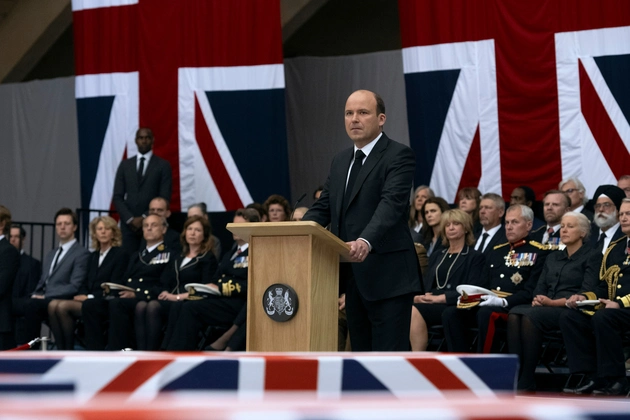
The transatlantic exchanges are textbook bilateral diplomacy: a choreography of obligation and irritation, where behind every meeting lies a question of loyalty that no press statement can answer. The ambassador’s struggle to balance American interests with British sensibilities captures the friction that real envoys face daily, minus, of course, the glamorous hair and high-speed motorcades. In the end, diplomacy, like marriage, is a partnership without the luxury of divorce.
Multilateral diplomacy: The crowd scene
Occasionally, The Diplomat widens its lens. NATO hovers in the background, a chorus of allies and agendas, as the drama expands to include crises involving Russia and the Middle East. These moments nod toward the messier art of multilateral diplomacy, the world’s endless attempt to turn competing interests into consensus. Genuine multilateralism is slower than the show suggests; it involves drafting communiqués, midnight edits, and far too much coffee. Yet when the series cuts to rooms lined with flags and taut smiles, it captures the claustrophobic politeness of such encounters.
Multilateral diplomacy is a theatre with high stakes: everyone performing cooperation, everyone calculating advantage. The show understands that behind the ritual lies the quiet terror of failure, the instant when the smiles fade, and the allies stop pretending to agree.
Public diplomacy and soft power: The performance of statecraft
Diplomacy, like acting, requires a performance. Modern diplomats spend as much time cultivating public image as they do drafting communiqués, and The Diplomat captures this tension with precision. Kate Wyler, who would rather negotiate in Kabul than pose for photographers at a palace, embodies the modern envoy’s discomfort with celebrity. Yet in an age ruled by optics, public diplomacy, the art of shaping foreign publics rather than governments, has become inseparable from statecraft itself.
Image-building, the ceremonial, cultural, and communicative craft of soft power, now travels faster than policy. The series dramatises this truth when Kate is forced to attend receptions, shake hands, and deliver rehearsed warmth. It’s a subtle form of warfare: persuasion by visibility. The show exaggerates the glamour, but it grasps something essential – that diplomacy’s front stage often matters as much as its backstage.
Crisis diplomacy: Talking at the edge
Television adores crisis, and The Diplomat obliges. Explosions, leaks, threats of war, and all the raw materials of suspense. When a British warship erupts or a nuclear threat looms, diplomacy becomes emergency theatre: crisis management, triage by phone call. The ambassador must act faster than protocol allows.

This is crisis diplomacy, where communication must be immediate, mistakes irreversible, and restraint heroic. The show’s breathless tempo: midnight briefings, moral panic, decisions made in minutes, may feel cinematic, yet its logic is sound. In the real world, practitioners would simply add layers of bureaucracy between the phone call and the decision. Still, the essence holds: in a crisis, diplomacy sheds ceremony and becomes survival, not unlike medicine or marriage counselling, but with nuclear consequences.
Coercive diplomacy: The art of the threat
Every negotiation carries a hint of coercion, a suggestion that something unpleasant will follow if persuasion fails. The Diplomat is charged with this tension: talk of bombing runs, sanctions, and veiled warnings. Throughout the series, the spectre of military action hovers in the background, a reminder that the threat of force, explicit or implied, remains a diplomatic instrument. Known as coercive diplomacy, it depends on the delicate balance of pressure and promise.
The show, ever hungry for drama, turns negotiation into brinkmanship. In reality, coercion is a slower, subtler craft of signalling, sequencing, the choreography of threat. Television condenses this into a single line: ‘If they don’t listen, we’ll act.’ Yet the essence holds true. Diplomacy is, at its core, the attempt to make others do what they otherwise wouldn’t without firing a shot.
Track-two and back-channel diplomacy: The wine-cellar method
Some of the show’s most revealing scenes happen not in conference rooms but in wine cellars, back corridors, and unmarked cars. These are the habitats of informality, or ‘track-two’ diplomacy, where unofficial actors do the talking so that official ones can deny it. The Diplomat romanticises these encounters: whispered deals in the half-light, secrets traded over fine wine, but the truth beneath the fiction holds steady: diplomacy thrives on discretion.
A quiet conversation between envoys can achieve what no summit can. The show may overstate how often an ambassador slips away to meet shadowy operatives, but it grasps the essence. In international relations, the most decisive exchanges are rarely the ones that make the news.
Economic and public-private diplomacy: Money talks
Although largely focused on security, The Diplomat occasionally gestures toward economic diplomacy: reconstruction contracts, trade negotiations, and the exertion of influence through investment. Money, the unspoken undercurrent of nearly every diplomatic crisis, receives little screen time, yet its presence is felt in every tense conversation. In the real world, economic diplomacy has become the strength of statecraft: supply chains, investment treaties, and sanctions now wield more power than battleships.
A real ambassador might spend more hours courting investors than generals. Television, naturally, finds spreadsheets insufficiently cinematic; the show skips over the drafting of trade clauses, perhaps wisely. Still, the economic pulse hums beneath every political exchange, like the low note of a cello, shaping outcomes as imperceptibly and inexorably as any carefully worded briefing or deftly timed ultimatum.
Cultural diplomacy: The softest power
From state banquets to royal ceremonies, The Diplomat luxuriates in the theatre of diplomacy: the toasts, the gowns, the choreographed charm. These rituals are far from mere frills; they are instruments of persuasion, expressions of continuity and hierarchy. Cultural diplomacy, the use of heritage, language, and values to project influence, thrives precisely because it hides its purpose behind civility. A state dinner can convey trust; a misplaced seating card, however, can be an offence.
The show captures this elegance, even if it occasionally mistakes symbolism for spectacle. In The Diplomat’s London, culture and politics merge into stagecraft, and perhaps the most faithful insight of all emerges: diplomacy endures because it turns theatre into order. The world is held together as much by ritual as by rule.
Digital and information diplomacy: The invisible arena
If The Diplomat has a flaw, it is its nostalgia for an analogue world. Its crises unfold in rooms, not on screens; its intelligence comes from whispers, not hacks. Absent but increasingly vital is digital diplomacy: social-media arguments, cyber leaks, and the careful management of narratives. Real diplomacy now competes with these forces, where influence travels at the speed of outrage, and a single tweet can undo months of negotiation. The series touches on media management but stops short of exploring how much statecraft now occurs online, in the glare of public scrutiny. One suspects that the next season will catch up, portraying ambassadors fighting not only over policy but over narrative, a reminder that in the twenty-first century, the art of persuasion is as much about managing perception as it is about drafting communiqués.
Beyond the drama: What it teaches
For students of international affairs, The Diplomat is a useful textbook that introduces viewers to the spectrum of diplomatic practice, encompassing bilateral, multilateral, public, crisis, coercive, informal, economic, cultural, and digital approaches. Television may turn diplomats into protagonists, but the truth is subtler: most days, diplomacy looks like paperwork, not heroism. Yet when the world’s machinery stumbles, it is these same cautious, exhausted, unarmed bureaucrats who keep it from breaking apart.
Beneath its gloss and urgency, the series understands that diplomacy remains, at heart, a profoundly human craft, reliant on temperament, improvisation, and empathy, qualities that cannot be automated or dramatised without distortion.