We don’t know the exact moment diplomacy began, and we probably never will. But we can say, with high confidence, that its roots stretch far beyond palace courts and parchment treaties, back into the deep past of our species, and even before it.
Clues from our distant cousins
If you look at our closest relatives, the great apes, a picture emerges that feels strikingly familiar to anyone who’s watched a negotiation play out. Research on chimpanzees and bonobos, most famously by primatologist Frans de Waal, shows complex social bargaining, peacemaking, and coalition building. After fighting, rivals reconcile. Dominant primates mediate disputes to keep the group intact. Many of these interactions hinge on empathy and a rough sense of fairness.
None of this is “diplomacy” in the state-to-state sense, of course. But it’s hard to miss the family resemblance. These behaviours serve the same core purpose: preventing conflict from tearing a community apart and creating space for cooperation. That suggests the capacity for diplomacy emerged earlier in our evolutionary lineage, before modern humans evolved: reading intentions, managing relationships, de-escalating tensions
Proto-diplomacy
Fast forward to early Homo sapiens and you find richer evidence in the archaeological record. As discussed in the second edition of History of Diplomacy and Technology, long before there were states, there were practices that looked like proto-diplomacy among bands, clans, and tribes:
- Trade and exchange. Objects travelled astonishing distances for their time, implying trust networks across group boundaries. Trade is rarely just about goods; it’s also about relationships.
- Gifts and hospitality. Ritualised giving reduces uncertainty and signals peaceful intent.
- Marriage alliances. Tying kinship lines across groups created durable channels for dialogue and mutual restraint, an early human solution to the problem of intergroup violence.
These practices didn’t require a foreign ministry. They required something more basic: social intelligence, memory of past interactions, and shared norms about what counts as honourable behaviour.
What ‘counts’ as diplomacy?
If we define diplomacy narrowly as formal, written engagement between sovereign states, then it appears relatively late in human history, alongside cities and empires. But if we define diplomacy by function as structured communication across group boundaries to prevent or manage conflict, then its roots trace back to early humanity and even beyond.
That broader lens helps us see continuity across time:
- From mediators to ambassadors. The influential elder who brokers peace between feuding clans and the modern envoy who defuses a crisis are performing variations of the same role.
- From ritual to protocol. Early gift exchanges and hospitality rites evolve into today’s diplomatic protocol and confidence-building measures.
- From kinship ties to institutions. Marriage alliances give way to treaties, secretariats, and permanent missions, but the goal remains: stable, predictable relations.
Why this origin story matters
Seeing diplomacy as an evolutionary inheritance, not just as a current profession, changes how we value it:
- It’s natural, not naive. Negotiation and reconciliation are not luxuries; they’re survival strategies honed over millennia.
- It’s teachable. If the building blocks are empathy, fairness, reputation, and norm enforcement, then diplomatic skill can be cultivated far beyond the profession, per se.
- It’s adaptable. The tools evolve (from marriage alliances to multilateral treaties; from campfire councils to encrypted chats), but the underlying logic endures: reduce uncertainty, manage rivalry, make cooperation possible.
So, when did diplomacy start?
As a formal profession, relatively late. As a human (and pre-human) practice, astonishingly early. Long before embassies and communiqués, there were reconciliations after fights, mediators with moral authority, and relationships carefully tended across fragile boundaries. In that sense, diplomacy did not start in state capitals. It started in the social lives of primates, and it has been with us ever since.
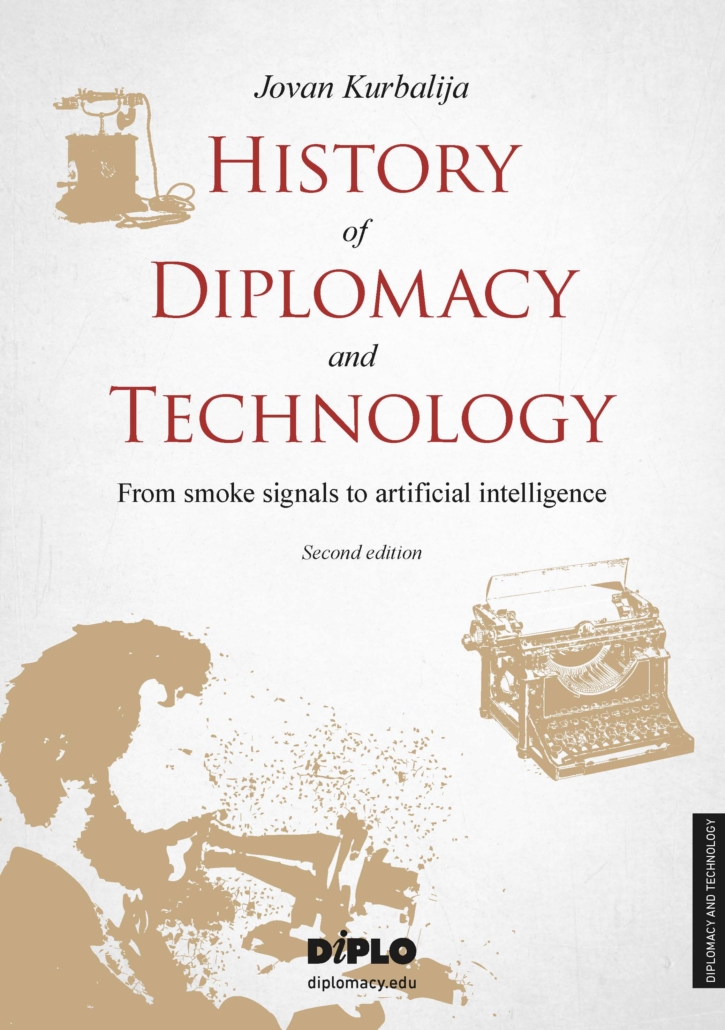
History of diplomacy and technology takes readers on a journey across 5,000 years of human interaction—from early messengers and clay tablets, to the printing press and telegraph, all the way to algorithms and artificial intelligence in today’s foreign ministries.
This long view reveals both continuity and transformation in diplomacy’s relationship with technology. READ MORE
Click to show page navigation!