In the Westphalian paradigm, states are sovereign in their national policies. In today’s world, deliberative democracy legitimises state laws and policies. International alignment of national laws and policies is achieved through multilateral agreements based on consensus. Their legitimacy depends on national ratification. State laws and regulations are the outcome, and state bureaucracies oversee implementation.

This paradigm is now being rapidly eroded. Voluntary and voluntaristic international non-governmental organisations (INGOs) – civil society organisations that spontaneously create standards in areas such as labour, environment, and human or animal rights – often act as a ‘half-way house’ similar to state regulation in federal systems (e.g. environmental standards set by individual states in the USA). These organisations establish voluntary norms. Although not legally binding, the threat of embarrassment usually ensures compliance, both domestically and abroad. In today’s transparent world, reputation strongly affects market sales, and exposure can damage personal or political lives. Once a standard is established, private bureaucracies may emerge to verify and certify conformity.
This new paradigm may nullify or replace the old one, undermining decades of laborious international negotiation.
For example, while the Swiss government cautiously liberalises its agricultural policies, major retailers reverse these efforts. Their up-market labels – such as ‘organic’ and ‘regional products’ – give trusted local producers higher mark-ups and larger market shares. Consumer preference, rather than trade barriers, now disadvantages foreign competitors.
Private initiatives can also reach areas where governments hesitate to act. Governments agreed to side-line ‘trade and social standards’ in the Doha Round. Yet the Social Accountability SA 8000 standard, developed by the Business Social Compliance Initiative in Brussels and Social Accountability International in New York, may signal the rise of voluntary international standards in labour and social policy. These initiatives model themselves on ILO deliberations, which gives them credibility.
Voluntary standards are also emerging in corporate governance, public health, and foreign aid. The pattern is familiar: abuses are exposed and emotionally debated, exemplary standards are set, and the threat of boycott enforces compliance. Voluntary standards disregard sovereignty. Conformity with national laws offers no protection against stricter voluntary standards.
These exemplary effects often spill into related fields as firms and individuals rush to avoid negative publicity. Those who can shape public opinion hold extraordinary power. Ironically, size and notoriety – strengths in the market or public arena – become weaknesses, as Walmart and Mattel discovered.
Voluntary standards differ from regulations. Their strengths and weaknesses include:
- They are tentative, flexible, and evolutionary – often ‘works in progress’.
- They arise as ad hoc responses to abuses and can be inconsistent or incoherent.
- Competing standards may lead either to informed rule-making or to radicalisation.
- Their durability is untested; they may fade or be absorbed into governmental processes.
- No mechanism exists to remove defective standards; they disappear only through time or competition.
- They rely on embarrassment rather than law, risking both excess and failure (the Papacy in the 13th century attempted moral persuasion for dominance, but ambition doomed it – a warning of such fragility).
- They may overcome democratic stagnation by bypassing vested interests.
- They are often seen as conventions, lacking principled legitimacy.
- They lack broad legitimacy, being designed by elites with little accountability.
- They blur the responsibilities of government, civil society, and citizen.
- Verification, when it exists, may be opaque and self-referential.
- Compliance costs may be high and less efficient than public bureaucracy.
Their real strength lies in breaking stagnation through trial, error, and competition. They are educated guesses that address issues quickly and can be discarded more easily than laws.
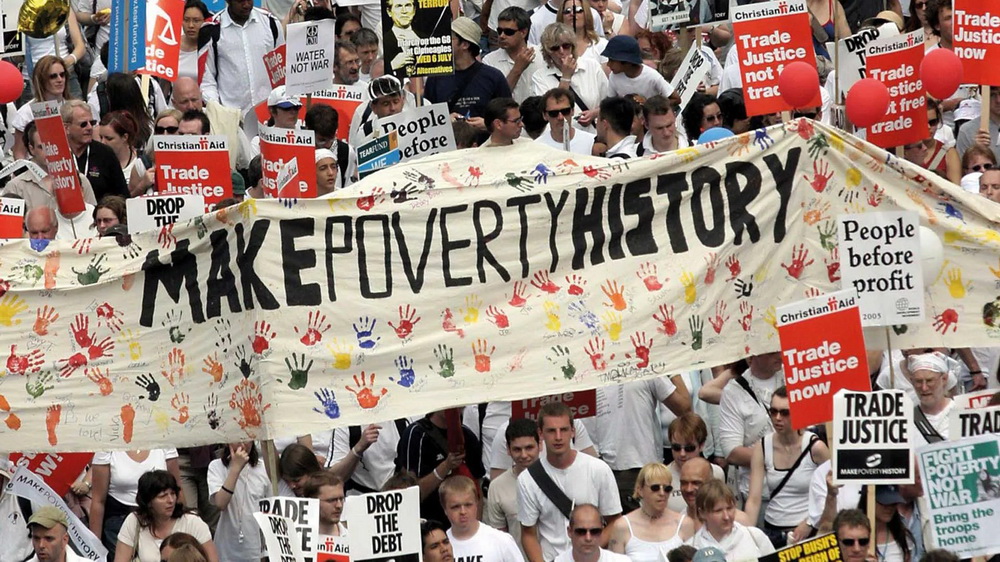
Deliberative democracy relies on the ‘wisdom of the crowds’. The price of voluntary standards, however, is elitism – minorities imposing norms. Elitism mixed with hype and emotion can lead to manias and panics (see The Wisdom of Crowds by James Surowiecki). Voluntary standards, therefore, can be inspired, unfair, or even disgraceful.
Why have voluntary standards become fashionable? Pessimists argue that modern complexity overwhelms democracy, which demands too much of citizens (being a citizen in Athens was a full-time job). Optimists claim that voluntary standards are inspired ‘shots in the dark’ – useful when collective wisdom cannot solve the unknowable. Whatever one’s view, voluntary standards have become an emerging reality that may nullify traditional intergovernmental rule-making.
New paradigms rarely replace old ones outright – they often coexist while their worth is tested. Hybrid situations may persist. Diplomats, representatives of the sovereignty-centred model, must now accept that civil society initiatives can equal or override their plans. They have lost both the monopoly of forum and initiative: state-to-state negotiations are now only one arena among many.
Diplomatic negotiations, like modern wars, are no longer set pieces. They have become fluid. Diplomats no longer dominate, supported by auxiliaries; principles, analysis, and tactics may be swept aside by emotion or overtaken by ‘non-combatants’. Complex negotiations (e.g. the Doha Round) are increasingly hard to control.
To achieve results, diplomats may need to abandon hierarchy and embrace ‘mongrelisation’. A photo of an out-of-focus Tony Blair listening as Bono speaks on aid to Africa captures this new reality.
Adapting to this change is no small task. The loss of status is hard to accept. Moving from hierarchical to dispersed structures demands innovation, adaptability, and a careful balance between principle and opportunism (see On Bullshit by Harry G. Frankfurt). Knowledge remains essential, but it now plays a quieter role – like the unseen hands in bunraku.
Such is the new diplomatic life.
The post was first published on DeepDip.
Explore more of Aldo Matteucci’s insights on the Ask Aldo chatbot.